

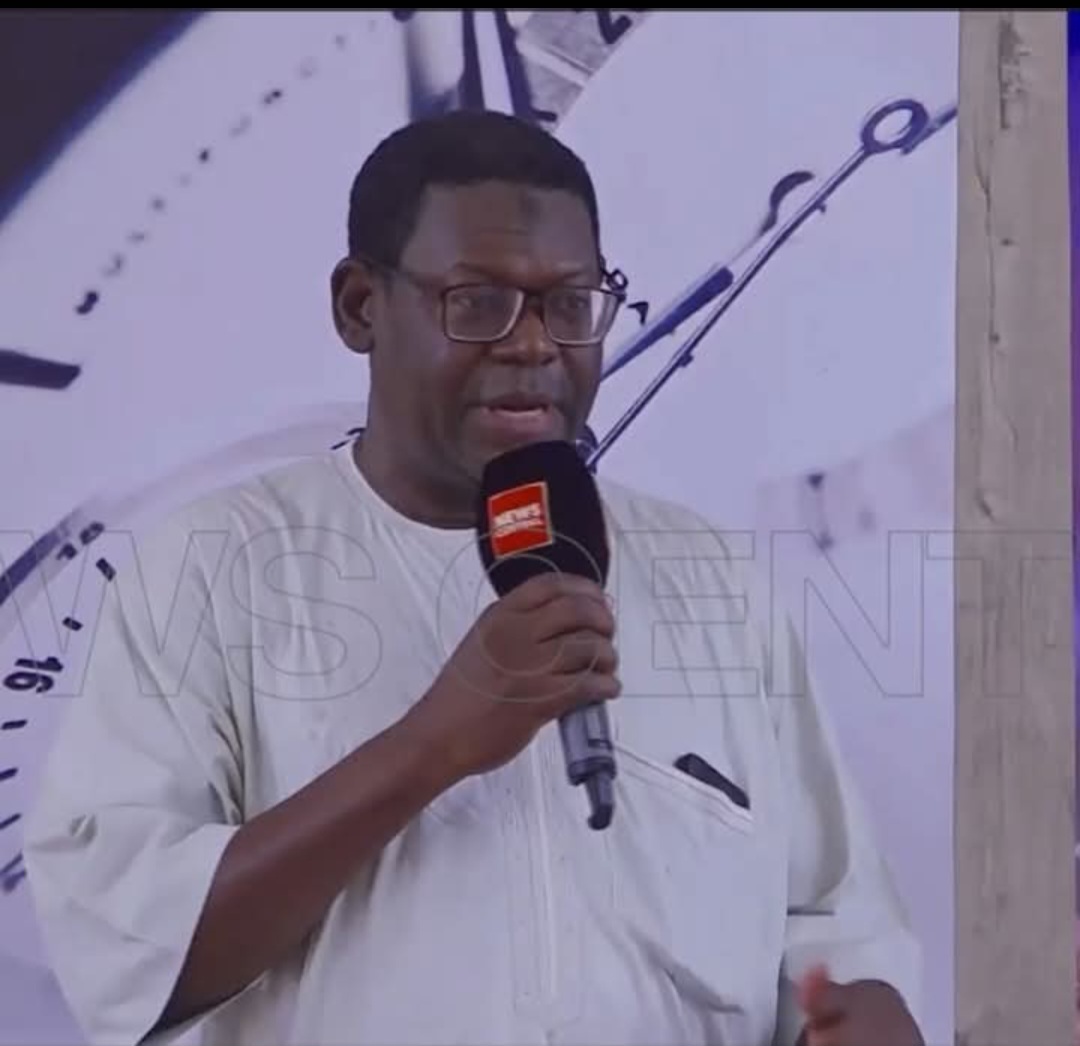
Abubakar Mu’azu
Unimaid
South Africa is in news across Africa again for the very wrong reason and a consequence of the failure to present the narrative of the liberation of the country from Western, whites, racists, colonisers and Imperialists under the reprehensible culture of apartheid. This is not the first time that the ordinary people of South Africa have targeted fellow Africans, to reject them out of that country. The recent attacks against fellow Africans has come at a time that the drive for the liberation of Africa is gaining currency, wide acceptability and greater legitimacy from the imperialistic controls of Western countries operating very corrosive neo-colonial machines masqueraded as independence.
These recent attacks appear better coordinated and widespread giving the impression that the so-called other Africans are the problem of South Africa. This superficial assumption may appear to make sense to the ordinary South African. However, the South African authorities need to undertake serious investigations and unravel the seemingly sudden resurgence of xenophobia in that country. This recent anti-Africans attack may be a result of a subtle external imperialist engineering to cause greater problems for South Africa for its principled and historic stance against the Israeli genocide in Gaza. President Trump of the USA has made attempts to engineer instability in South Africa by suggesting with dubious intentions that the “whites” in South Africa needed liberation. He offered to appropriate the “whites” into the “safe haven of America.” That dubious narrative collapsed.
But beyond the external machinations, South Africa must confront certain critical realities that defined and shaped its liberation from the white racist regime that colonised it, stole its land and resources and demonised them as sub-humans. South Africa had to organise liberation struggle against the inhuman contraption called apartheid that created divisions between the indigenous population and white supremacists conquistadors. That struggle for emancipation of South Africa was wedged within and outside the country. African countries devoted resources, time and energy to support the overthrow of the dubious inhumane project called apartheid. Many South Africans found ready refuge, training and support for their liberation. For example, Nigeria became a major voice against apartheid and other Western colonial projects on the African continent.
Nigeria did not only accommodate the South Africans without questions, it committed financial and military resources to the struggle for the emancipation of South Africa. During the time of the struggle, the countries in Southern Africa defined themselves as Frontline States in their drive for independence. Though Nigeria is geographically located in West Africa, it was accepted and inducted and accepted as one of the Frontline States. This happened because of the unflinching determination of Nigeria towards ensuring the liberation of Angola, Mozambique, Namibia, Zimbabwe and South Africa from white colonial oppression, control and theft of resources. Apparently, upon becoming politically free the authorities in South Africa chose to neglect telling its people the support, sacrifices and recognition by Nigeria. It will not be surprising if most South Africans do not know that Thank Mbeki, former President reside and coordinate the struggle against apartheid from Lagos utilising Nigerian resources and accommodation. He was so at home that he is known by the sobriquet “Lagos Boy.”
That conversation and enlightenment is missing in the South African narrative such that the citizens of that country believe that they never got any support from any African or country. Indeed, most of them think that they struggle against the white supremacists’ colonial machine alone. It does seem that the South African authorities have chosen not to get their people to understand the sacrifices and strong support from African countries. Nigeria alone spent a whooping $16 billion in the campaign for the liberation of that country. That financial sacrifice was in the belief that the collective destiny of Africa is tied together and must continue to be pursued to this day. It was the spirit of Africanness that informed and drive that sacrifice. Besides money, there other forms of support and sacrifice that the South African authorities know and need to share with the people. Africa fought together and needs to learn to celebrate together, not to fight each other. African solidarity must be supported and presented historically, the present and in the future.
Nigeria needs to learn to projects its contributions and actions in support of African countries. The position that Africa is the centrepiece of Nigeria’s foreign policy must continue to be upheld. In doing so, when Nigeria aids any African country, it needs to be announced to the citizens of the receiving country for them to know and appreciate the organic connection among Africans. For years Nigeria had adopted the position that it will announce its support for African countries in the name of African solidarity. That has given room for exploitative African countries to pretend to be better supporters of African causes. This must change.
The external broadcasting service, Voice of Nigeria (VON), is one of the assets that Nigeria must leverage on to project the country positively to foreign countries. There is the need for closer collaboration and planning among the Federal Ministry of Foreign Affairs and Nigeria’s Institute of International Affairs (NIIA) to define the content and project Nigeria positively. Nigeria cannot afford to leave these agencies to be operating without close collaboration in the interest of the country. Nigerian Embassies and High Commissions need to also work closely with VON to continue protect and project the interest of Nigeria. This way misinformation, disinformation, mal-information, fake news and other forms of dustorund would be countered and clarified. There is every reason to revisit and reposition VON to continue to advance Nigeria’s interest.
The South Africans may not be justified in attacking fellow Africans. However, every African living in another country must respect the laws and act with decorum as individual ambassadors of their countries. The manifest anger against Nigerians in South Africa was a consequence of the ireascible behaviour of some people. For instance, the South Africans complain about the irresponsible Nigerian pushers destroying their country. They are right to reject such people. Yet in their rejection that can resort to the law rather than self-help. Jungle justice is condemned, rejected and unacceptable.
African countries collectively and individually need to use their resources to keep on reminding the characters in South Africa how much they sacrificed, supported and uprooted the evil.system called apartheid in South Africa. This is necessary from the South African people to know that they did fight the evil system alone. All Africans, except a few brainwashed and subversive ones, supported them in their struggle. That historical fact cannot be wished away and must be considered and accepted as the real path for the continued liberation of Africa from foreign exploitative and submersible controls.
Africans need to recognize that there is no foreign country that will liberate them. Instead, the foreign will continue to come to Africa under the guise of being friends and partners, but have a clear agenda of keeping Africa exploited, underdeveloped and poor. It is this sense that those countries that have embarked on the revolutionary of protecting their country and defending their sovereignty have set a liberation example that all Africans must support and fightfir. Fir long, Africa’s enemies have dressed themselves as friends and partners and have continued to ensure the subjugation, exploitation and impoverisation of Africa. It is time to stop the xenophobia in South Africa with the right African narrative and liberatory actions.
С 1997 года симферопольская компания «Транзит Медиа» задаёт стандарты рекламного производства в Крыму: широкоформатная полноцветная и УФ-печать, брендирование корпоративного транспорта, изготовление баннеров, вывесок и изделий из акрила — всё это выполняется на собственном оборудовании с использованием качественных европейских материалов. Подробный каталог услуг и актуальные цены производителя размещены на https://transitmedia.ru/, где можно сразу оформить заявку. Более 25 лет безупречной работы, гарантия на все изделия и услуги, доставка по Симферополю и городам Крыма — весомые аргументы в пользу надёжного партнёра для вашего бизнеса.
Эта публикация обращает внимание на важность профилактики зависимостей. Мы обсудим, как осведомленность и образование могут помочь в предотвращении возникновения зависимости. Читатели смогут ознакомиться с полезными советами и ресурсами, которые способствуют здоровому образу жизни.
Посмотреть всё – вывод из запоя вызов