

By Mangili John Caleb
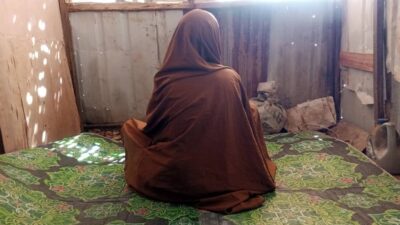
At 13, Maryamu Adamu was still in school, sitting in a crowded classroom in Maiduguri and dreaming of becoming a doctor. However, her dream was cut short, she could complete her basic education. She was withdrawn from school and married off.
In parts of Borno State, this story is repeated in different forms often quietly, rarely documented in full and frequently accepted as part of life.
Child marriage continues to shape the futures of thousands of girls in the state, cutting short education and exposing them to serious health risks before they are physically or emotionally prepared for marriage.
Nigeria has one of the highest numbers of child brides globally.
According to UNICEF, millions of girls in Nigeria are married before the age of 18, with higher prevalence in the northern region, including states such as Borno.
The Nigeria Demographic and Health Survey (NDHS 2018) shows that:
Girls in northern Nigeria are significantly more likely to marry before 18.
Regions with higher child marriage prevalence also record higher adolescent pregnancy rates.
In Borno, years of conflict, displacement, and poverty have further increased vulnerability among adolescent girls.
Maryamu Adamu teacher at a public junior secondary school in Maiduguri remembers her ”as bright and focused”
Hajiya Salmatu, a teacher at Bolori Day Secondary School in Maiduguri. “She was very active in class. She loved science. One day she just stopped coming. Later, we heard she had been married. That is how many girls leave school silently.”
School officials say many dropouts are not formally recorded as marriage related, making the scale of the problem difficult to fully document.
In Borno State, the impact of insurgency and displacement has deepened existing social and economic pressures.
Humanitarian and community workers say early marriage is link to how some families see it as a form of protection in unstable conditions and economic hardship which contributes to early withdrawal of girls from school and limited access to secondary education increases dropout rates.
Community elder Alai Modu says “Some parents believe marrying a girl early can protect her and reduce hardship in the home.”
Education desk officer at the Ministry of Education, Science and Innovation, Borno state, Hajiya Aisha Indimi warn that early marriage creates long-term consequences that extend beyond the individual girl.
” When girls leave school early their education is permanently interrupted or significantly reduced,
economic opportunities become limited,
dependence on family or spouse increases and intergenerational cycles of poverty are reinforced”
Aisha Indimi emphasized.
She further noted that “Once a girl is married off, returning to school becomes extremely difficult in most cases”
On the angle health implications of early marriage, Dr Ann Peter a Consultant Obstetrician and Gynecologist and also a member of Medical Women Association of Nigeria at the university of maiduguri teaching hospital describes recurring cases involving young mothers.
”When their married early, it usually lead to increase risk of early pregnancy especially the girl that doesn’t attend antinatal care’ They often have higher risk of obstetrict vistula, bleeding and consequently leading to maternal death”
“We see complications during pregnancy and childbirth in very young girls. Because their bodies are not fully developed, and this increases the risks.” she says.
The World Health Organization (WHO) identifies adolescent pregnancy as a major risk factor for obstructed labour, maternal mortality,
obstetric fistula and
newborn complications.
Nigeria’s Child Rights Act (2003) sets 18 as the minimum legal age of marriage.
However enforcement remains inconsistent across states due to cultural effects and implementation and awareness of legal protections is limited in many communities.
Child protection advocates say the gap between law and implementation continues to undermine efforts to end child marriage.
For girls like Maryamu, the consequences go beyond statistics.
Education is interrupted, health risks increase and dreams are delayed or abandoned.
Her ambition of becoming a doctor remains unfinished not because it changed, but because it was cut short.
Speaking to Gender expert Aishatu Alhaji Kabu Founder of the Zenith of Girl Child and Women Initiative Support. She explain that “Child marriage in Borno State remains a pressing human rights issue with deep consequences for education, health, and long-term development.
She further explain that “Children born to parents that are not empowered can lead to intergenerational effects, children will grow in poverty, uneducated and of course they will marry early ‘it’s a cycle ‘ she said
As communities, policymakers and humanitarian actors continue to respond, advocates say protecting girls’ education and strengthening enforcement of child protection laws remain critical as behind every statistic is a girl whose future is still being decided too early.






Крымский курорт Судак давно покорил сердца путешественников своей нетронутой природой, уникальными пляжами из кварцевого песка и кристально чистым морем — самым экологически чистым на всём полуострове. Купальный сезон здесь длится 138 дней, а живописные горные вершины, бирюзовые бухты и знаменитая Генуэзская крепость делают это место по-настоящему незабываемым. Туристско-оздоровительный комплекс https://tok-sydak.ru/ предлагает комфортное проживание в номерах различных категорий с возможностью онлайн-бронирования и выгодной скидкой 10% при раннем бронировании до 1 апреля 2026 года. Здесь вас ждут уют, живописные виды и профессиональный сервис.
melbet bypass blocking http://www.melbet63047.help
я в шоке. до последнего думали кидалово. а нет подняли в касание. стафф пушка. кладмену респект!!! https://mskstyle.ru вобщем моя командировка в Столицу нашей родины удалась ) день переговоров и 6 дней удовльствия !!!!!Отличнный магазин