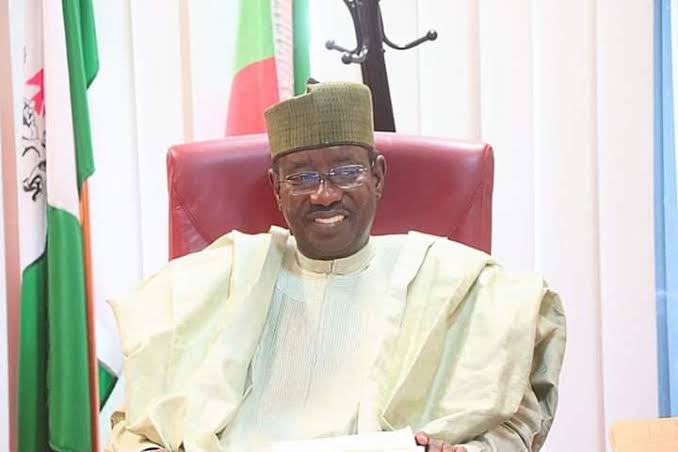
By Kasim Isa Muhammad
For a long time, I have wanted to write about the governorship race in my state, Yobe. But something has always held me back—my profession, journalism. Over the course of my career, I have tried too many times to be numbered to remain neutral in politics. I have always avoided taking sides, focusing instead on issues that directly or indirectly affect people’s lives. My goal has been to push for change by drawing attention to problems and urging the government in a strongest possible terms to act. But I have come to realise that real change cannot happen without political will. If we really want to tackle underdevelopment in Yobe, we must confront the reality of governance in our state.
Over the years, I have seen how politics in Yobe has been shaped by exclusivity and intolerance. This has prevented progressive leadership, leading to stagnation and a loss of potential. If we want real progress, we must abandon narrow political thinking and succinctly draw broader vision that includes everyone in the state’s development.
To be clear, I have never met Senator Bomai in person. I have no personal or professional ties to him or his allies. In fact, I have been one of his strongest critics in Yobe South. I have written so many articles calling on him to focus on youth empowerment and use Zonal Intervention Projects to create jobs for unemployed graduates in Potiskum, Fika, Fune, and Nangere local government areas, which he represents, which he did. My criticisms were never personal; they were driven by my so much desire to see leaders fulfil their duties. Looking back, I realise I have always hoped—perhaps too optimistically—that those in power would do the right thing without external pressure. But history has taught us otherwise.
Now, I know you are wondering why I am now supporting Senator Bomai’s bid for the Yobe governorship in 2027. Some might say it is too early to discuss the next election, but I ask you to hear me out.
Since Nigeria’s return to democracy in 1999, Yobe South has been marginalised politically. Despite being the most populous region in the state, contributing significantly to the economy, and producing many graduates, the zone has been largely ignored in governance. In the last 26 years, Yobe South has had only one governor—Mamman B. Ali—who sadly passed away just two years into his tenure. Many believe he was one of the best governors Yobe ever had. His leadership left a mark, and one can only imagine the progress Yobe would have made if he had lived longer.
For the past 24 years, Yobe East (Zone A) has dominated Yobe state leadership, including the current administration of Governor Mai Mala Buni. Nevertheless, it is becoming pathetic. It is time for Yobe South to play a meaningful role in governance.
Senator Bomai’s extensive experience in public service makes him a reliable candidate for governor. He has spent most of his career in government administration, gaining the expertise to handle insurmountable governance issues. His track record reveals his ability to design a clear roadmap and implement policies that bring results. With a well-thought-out development plan, he has the potential to take Yobe to new notable heights. Having received a Diploma in Accountancy in 1980, and a Higher National Diploma in Accountancy (1982) both from the Kaduna Polytechnic. He obtained his Master’s Degree in Business Administration (Finance) in 1999 from Abubakar Tafewa Balewa University, Bauchi.
His academic background in finance laid a strong foundation for his career in public service and governance. Before venturing into politics, Bomai worked in various capacities within the civil service, including roles in the Nigerian Federal Ministry of Finance, where he gained exceeding experience in public financial management and economic policy.
Meanwhile, let me set record straight: my support for Senator Bomai is not based on regional affiliation. It is, of course, about ensuring Yobe gets the best leadership. Leadership should not be entirely about political party or ethnicity—it should, in fact, be about competence, vision, and the ability to bring positive change. For too long, complacency and weak governance have held Yobe back. We must wake up to the urgent need for change.
As we approach the 2027 elections, we must demand transparency, accountability, and good governance from our leaders. The future of Yobe depends on the choices we make today. Senator Bomai has served the public for over 30 years. It is high time Bomai took the next step—running for governor and bringing his experience to the service of the entire state.
Yobe stands at a turning point. We must make informed decisions that will determine our progress. The state needs a leader who is not only capable but also exceedingly dedicated to the people’s welfare. If given the opportunity, Senator Bomai could, unquestionably, lead Yobe into a new era of development, placing it among the best states in Nigeria.