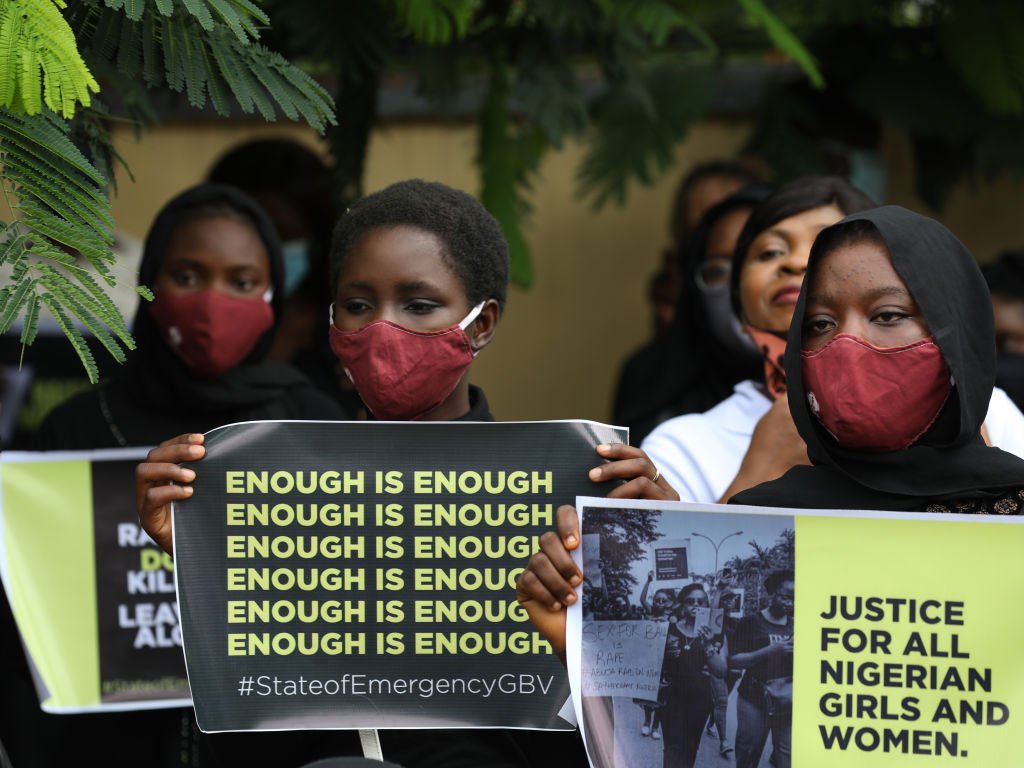
Cases of Sexual and Gender-Based Violence (SGBV) in Yola North and Yola South Local Government Areas of Adamawa State are gradually declining, as sustained awareness campaigns, improved reporting mechanisms, and growing confidence among survivors begin to yield results, stakeholders have said.
In this special report by Abubakar Ibrahim, at the Ministry of Women Affairs clinic in Yola, health workers report that more survivors are now presenting early for medical care, enabling timely treatment and psychosocial support.
A medical doctor at the clinic, Dr. Michael Paninga, described the development as encouraging saying that more survivors are now coming earlier than before the development according to him gives them the opportunity to provide proper treatment and counselling.
At the police headquarters in Yola, officers at the gender desk also confirm improved cooperation from families and traditional leaders, resulting in fewer case withdrawals and stronger prosecutions which according to the Adamawa State Police Public Relations Officer, SP Sulaiman Yahya Nguroje, the families are increasingly standing by survivors throughout the legal process.
Legal practitioners say access to justice is improving as survivors gain greater awareness of their rights, Barrister Ruth Bah Ngwason, Principal Partner at Israel Solicitors and Secretary of the International Federation of Women Lawyers (FIDA), Adamawa State chapter, said the Violence Against Persons Prohibition (VAPP) Law provides clear legal protection for survivors.
”When survivors understand that the law is on their side, they are more willing to pursue justice The VAPP Law is clear, and we are seeing better enforcement because communities are cooperating,” she said.
The SGBV Response Coordinator at the Adamawa State Ministry of Women Affairs and Social Development, Falda Wesley, said while cases are reducing in metropolitan areas such as Yola North and Yola South, incidents remain higher in some rural communities due to limited awareness.
” The ministry’s focus is gradually shifting from emergency response to survivor empowerment and long-term recovery” She stated.
“Every survivor who speaks up encourages others. This growing confidence is a strong signal that SGBV cases can be reduced when systems work together,” she added.
Survivors themselves say the support they received gave them the strength to heal and move forward. One survivor, who requested anonymity, said speaking out transformed her life.
She recounted how she was subjected to domestic abuse, divorced, and separated from her four-year-old daughter, leading to emotional trauma and fear. However, she said reporting the abuse opened the door to medical treatment, counselling, and legal support.
“I was afraid at first, but when I spoke up, I found help. Other survivors should know that they are not alone,” she said.
Traditional leaders say they are reinforcing zero tolerance for abuse within their communities. A ward head in Rumde, Yola North Local Government Area, Umar Muhammad, said silence is no longer acceptable.
“As traditional leaders, we now encourage immediate reporting. Protecting survivors means protecting the future of our communities,” he said, citing instances where traditional authorities supported survivors to pursue justice.
Stakeholders agree that sustained awareness, strict enforcement of the VAPP Law, and continuous survivor support are critical to maintaining the downward trend in SGBV cases.
For residents of Yola North and Yola South, the message remains clear: breaking the silence brings justice, healing, and hope.
Abubakar Ibrahim writes from Yola, Adamawa State.