

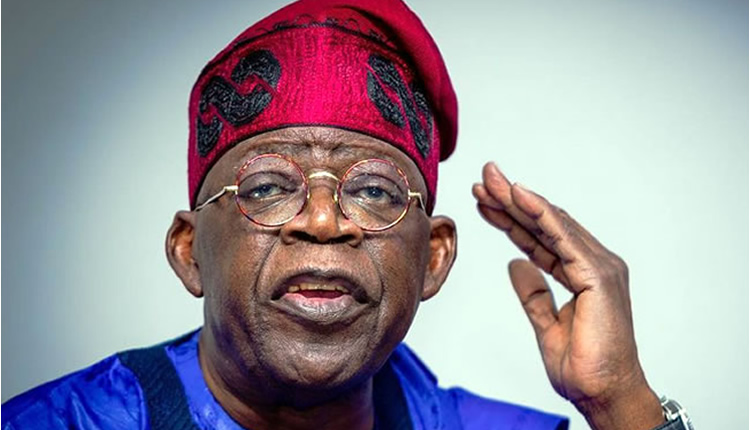
President Bola Ahmed Tinubu is facing increasing political opposition as his administration grapples with accusations of attempting to consolidate power and undermine Nigeria’s democratic institutions. In recent weeks, Tinubu has come under fire from both political rivals and civil society groups who argue that his actions threaten the country’s political stability and the principle of checks and balances.
Critics point to a series of controversial appointments that have raised eyebrows across the political spectrum. Several key positions, including those in the judiciary and law enforcement, have reportedly been filled with individuals loyal to Tinubu or his political allies, prompting accusations of nepotism and favoritism. Opponents argue that these appointments, made without sufficient consultation or transparency, are part of a broader strategy to solidify his grip on power and sideline political opposition.
Adding to the political drama, Tinubu’s government has been accused of using the security forces to suppress dissent and stifle opposition voices. Over the past few months, there have been reports of increased harassment of political activists, journalists, and opposition figures critical of the administration. Some high-profile members of the opposition have claimed they’ve faced intimidation tactics, while media outlets that are critical of the president have reported increased censorship.
The political opposition has not remained silent, with parties like the People’s Democratic Party (PDP) and the Labour Party (LP) accusing Tinubu of undermining the foundations of democracy in Nigeria. They argue that his administration is eroding the independence of key institutions like the judiciary and the electoral commission, setting the stage for a potential authoritarian rule. Some have even called on the president to step down, claiming that his actions are pushing the country toward an undemocratic path.
Tinubu’s supporters, however, defend his approach, arguing that the president is simply working to ensure national stability in a time of crisis. They contend that the appointments are necessary to streamline governance and implement the reforms promised during his campaign. They also argue that political opponents are simply trying to discredit Tinubu’s leadership and create chaos as the country faces mounting challenges, such as the economic downturn, insecurity, and rising unemployment.
The growing divide between the president and his critics is putting pressure on Nigeria’s political system, with calls for greater unity and a focus on national progress. However, with the 2027 general elections on the horizon, many are concerned that the political climate may become even more polarized, further deepening the divide between the ruling party and opposition forces.
As tensions rise, the question remains whether President Tinubu will be able to navigate these political challenges and maintain his grip on power, or if the growing opposition will ultimately challenge his authority in the months to come. With the country’s political future hanging in the balance, Nigeria’s democracy is facing one of its most critical tests in recent history.
Lovart AI sounds like a game-changer for designers looking to blend creativity with AI efficiency. The tri-modal interface is especially clever-can’t wait to see how it streamlines the design workflow! Lovart AI
Bài viết này đúng gu mình luôn, đọc xong thấy nhẹ cả đầu. Dạo này mấy app game bài đang chạy event mừng hè, chơi vui còn có quà, ai mà chịu nổi! Giải lao thì mình lại lướt vô 123win99ok, event nhiều, nạp ít mà trúng đậm.