

Abubakar Mu’azu
Unimaid
The security threat across Nigeria, beyond the armed robbery that we used to hear in the news has taken on a more virulent and more disturbing dimension in the northern parts of Nigeria. The security threat started with the occasional highway robbery in the northern parts, the popularly labelled “kwanta-kwanta” (lie down). It was quite unusual. But it continued to the extent that security personnel had to be placed at intervals, on the highways, for the protection and safety of road travellers.
Despite this effort, harrowing tales of successful dispossession of valuables from travellers became common. The situation was so bad that in some unbelievable cases, travellers were accusing the security personnel of compromises from abandoning the highways for criminals to operate freely to the disturbing allegations of robbery by the same personnel. Speculations became rampant.
One speculation, without any proof, was that the security personnel were making deals with criminals for a fee to allow them to operate for agreed periods. It is only after the time agreed upon had lapsed that the security would appear. Another speculation, without any proof, is that the security personnel would leave their security posts and mount robbery checkpoints to dispossess road travellers of their valuables.
The public accusation of security compromises started a long time ago. The “kwanta-kwanta” was most pronounced in the 1990s. Travel from Maiduguri to Yola, Biu, Damaturu: from Gombe to Yola or Kano; and Bauchi to Jis or Kano became a harrowing experience for road travellers. Those who traverse these roads can recall the level of apprehension that they experienced. On some occasions, the robbery could occur twice or more times on the same road at specific points on the highway.
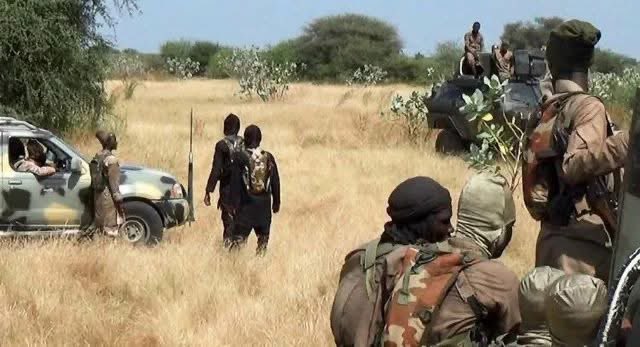
Then the worst moment came. The emergence of terrorist activities started with the labelled Boko Haram group and later ISWAP. Since 2009 terrorism has become a harrowing security experience. With more than 3.5 million displaced from principally Borno, Adamawa and Yobe States as internally displaced persons and refugees, destruction of infrastructure and unfortunate loss of life. Travel by road became a matter of tredipation. There were dangers of being shot by insurgents, robbery, abduction or kidnapping for ransom and forceful conscription into terrorism. Travelling became a necessary but potentially a life losing adventure.
Yet despite the uncertainties and dangers people had to travel. Every travel was an exercise in primitive heroism. The Maiduguri-Damaturu highway experienced cases of devastating security breaches, resulting in deaths and destructions. Mainok and Beni-Sheikh became spots of periodic attacks. Travellers that were lucky had seen dead bodies by the road sides, burning vehicles and homes. These happened at a time when there was heavy security deployments to combat Boko Haram. It also happened in parts of the North East areas under the State of Emergency.
Bad as the situation was, the Nigerian military in close collaboration with the Nigeria Police Force (NPF), Nigeria Security and Civil Defence Corps (NSCDC), Nigeria Immigration Services (NIS), Nigeria Customs Service and the intelligence agencies succeeded in clearing many areas leading to the return of Internally Displaced Persons (IDPs) to their towns and villages. While remarkable successes were recorded during the reign of Muhammadu Buhari as President, the security situation was getting worse in the North Central and North West. The security collapse and threat to life and property became widespread in the northern parts.
The comments on the security challenges focused on blaming the affected parts. The narrative about the security situation, by persons with a provincial understanding of national issues was cast in divisive terms: an exclusive national problem, an ethnic problem or a religious problem or a combination of all three. A blame game that does nothing to advance solutions to the security challenges. Despite this, the security agencies with all the compromises, imagined or real attributed to them, continue to confront the criminal elements making life and survival difficult to the Nigerian citizens resident in the affected areas.
The police became over-stretched and made their work difficult with limited firepower and support policing equipment. The military had to be drafted into supporting the police in internal security control. But the situation was more challenging than was imagined. It became an internal war made possible and sustained with foreign involvement through training of the criminal groups outside Nigeria, and supply of illicit weapons.
The public in the affected areas, in some places, have stated that they had seen helicopters with foreigners dropping weapons to insurgents in the North East. The dawning of a Nigerian Air Force plane in the North West is a clear demonstration of the sophistication of the criminals strongly suspected of gaining support from countries with an eye to stealing African mineral resources. There is no official pronouncement by the Nigerian government on this. But these are issues that the public talk about.
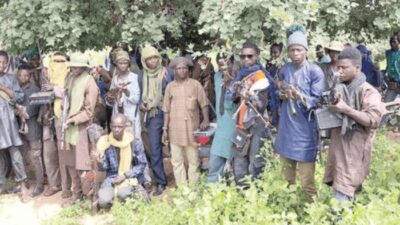
Both the police and the military are operating over wide areas with different challenges and complexities. The affected communities have recognised the need to support the security agencies in the fight against the criminals making life difficult for them. The Civilian Joint Task Force (CJTF) has become a major citizens and community opposition to crime and criminals. They team up with the security agencies to combat the insurgents in Borno. State. Similar voluntary policing groups have emerged, under different labels, to fight for their community security and safety. Hunters, volunteers and state governments supported outfits have stepped forward to confront the criminals.
Despite the support from citizen groups, the security situation continue to pose significant challenges to lead and order and return to peace. It is indeed leading to frustration across the country. It is not surprising that the one-time Chief of Army Staff, General T. Y. Danjuma, was reported to urge communities to protect themselves. There were immediate reactions to this suggestion, one of which is that community protection will lead to anarchy.
It seems to me that the security agencies need to re-evaluate the situation and trace the sources of strength of these criminal groups. If indeed foreign countries are involved and making life nasty, British and short for Nigerians, then the Federal Government of Nigeria needs to come out openly and sne the countries that are involved in undermining the collective security and safety of citizens and working actively to steal mineral resources and keep Nigeria poor and underdeveloped.
Nigeria needs to see the security challenges beyond the seeming internal tensions and be bold enough to recognise this as an external script to keep it as avassal State. This is a necessity trajectory of thinking for self liberation since the criminals seem highly armed, sophisticated and target resource rich areas in the northern parts of Nigeria.
The reported suggestion of self-defense by General T. Y. Danjuma needs to be considered in the context of building community volunteer groups working closely with the security agencies to deal with the security challenges. These community volunteer groups must never be encumbered by interests that want the security challenges to continue because of the allehed economic system that has reportedly developed from it. Communities know their people, their terrain and the criminals including high profile colluding elements among them. None should be spared.


Responses (13)