By Mustapha Muhammad Gimba
Kano has always been a place where politics moves before it speaks. Long before campaign posters appear or party flags are raised, alignments shift quietly, loyalties are tested, and old friendships begin to wear new colours. As 2027 approaches, this familiar undercurrent is once again visible, this time in the growing pattern of defections by political figures once considered close to Governor Abba Kabir Yusuf and the Kwankwasiyya political family.
To understand the significance of these movements, one must return to Kano’s political memory. From the era of Mallam Aminu Kano and NEPU, through the PRP years, Kano voters learned to separate the movement from the elite. The ordinary voter has historically remained loyal to ideology and symbolism, while the political elite often recalibrate their positions in response to power, access and survival. This tension has always existed, but it becomes sharper as elections draw nearer.
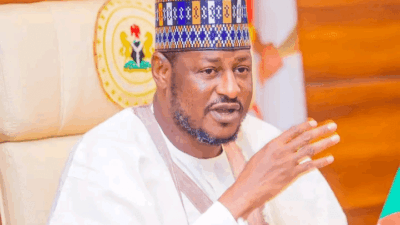
In recent months, the political space has been animated by the decamping of some National Assembly members, Senators and House of Representatives members who rode to the office under the NNPP platform but have since found new homes in the APC. These are not marginal figures. They are politicians who once benefited directly from the Kwankwasiyya wave that swept Kano in the last election cycle, and whose proximity to power gave them visibility, structure and relevance.
Their movement to the APC tells a familiar Kano story: when power shifts, elite loyalty becomes fluid.
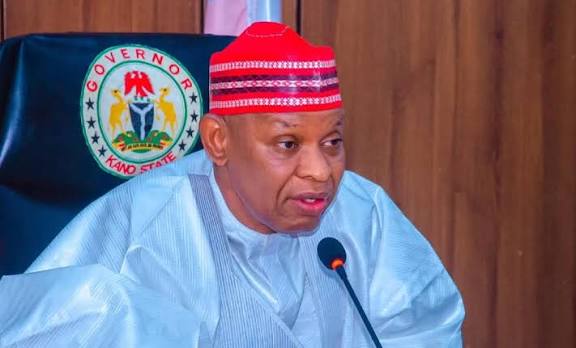
For Governor Abba Kabir Yusuf, these defections present both a challenge and a test. On the surface, the loss of legislators weakens institutional support at the federal level and complicates coordination between state and national politics. It also feeds an opposition narrative that portrays the ruling bloc as internally fragile, a movement struggling to hold its own political family together.
But Kano history cautions against simplistic conclusions. The defection of elites has never automatically translated into the defection of the masses. The fall of the PRP did not come simply because politicians left, it came when the ideological bond with the people weakened. Likewise, past governors in Kano have discovered sometimes painfully that elite alliances without grassroots loyalty are often hollow.
Still, defections are never meaningless. They affect perception and in Kano politics, perception is power. When those close to the seat of power leave, questions arise: are they reacting to governance style, fear of federal pressure, personal ambition, or calculations about 2027? Each defection, regardless of motive, chips away at the aura of invincibility that every ruling movement relies upon.
The APC, for its part, understands this psychology well. By absorbing defectors, it seeks not only numerical strength but symbolic momentum the suggestion that the tide is turning. Whether this momentum reaches the streets of Kano is another matter entirely. The party remains burdened by its own internal contradictions, unresolved rivalries and historical baggage. Kano voters have long memories, and they rarely forget periods of governance they consider distant from their everyday struggles.
What complicates the picture further is the role of federal power. In Nigeria’s political reality, proximity to the centre can influence elite behaviour significantly. Legislators are often more vulnerable to these pressures than governors with solid grassroots backing. This explains why defections tend to start from Abuja before they are felt in the wards. It is a pattern Kano has seen before.
For Governor Abba Kabir Yusuf, the road to 2027 will depend less on stopping defections and more on redefining loyalty. Kano’s political culture rewards leaders who can renew the emotional and ideological contract with the people. Visible governance, fairness in appointments, inclusion across tendencies and effective communication will matter more than the party label of any single senator or representative.
The youth factor also looms large. Many young Kano voters view defections with cynicism rather than admiration. To them, constant party switching confirms a belief that politicians are motivated more by access than conviction. In a digital age where narratives travel faster than rallies, the ruling government’s ability to frame these defections as personal ambition rather than collective rejection will shape public interpretation.
As Kano moves closer to 2027, the real question is not whether politicians will decamp they always do, but whether the movement still feels alive to the people. Kano has repeatedly shown that it can forgive elite betrayal, but it rarely forgives ideological abandonment. Governors rise and fall, parties change names, but the underlying demand remains the same, governance that recognises the dignity of the talaka.
If history is any guide, Kano will not decide its future in Abuja corridors or party secretariats. It will decide it in the quiet judgment of voters who ask a simple question: who still speaks for us? Those who understand this will shape the next chapter of Kano politics. Those who ignore it may discover, too late, that decamping does not always move the people.
Mustapha Muhammad Gimba