By Aisha Talba Ballama
In Maiduguri, recycled plastic bottles have become a common household item, often reused to store water, food, and other consumables. While they provide affordable solutions for low-income families, the journey of these bottles from trash to table raises serious concerns about health and environmental safety.
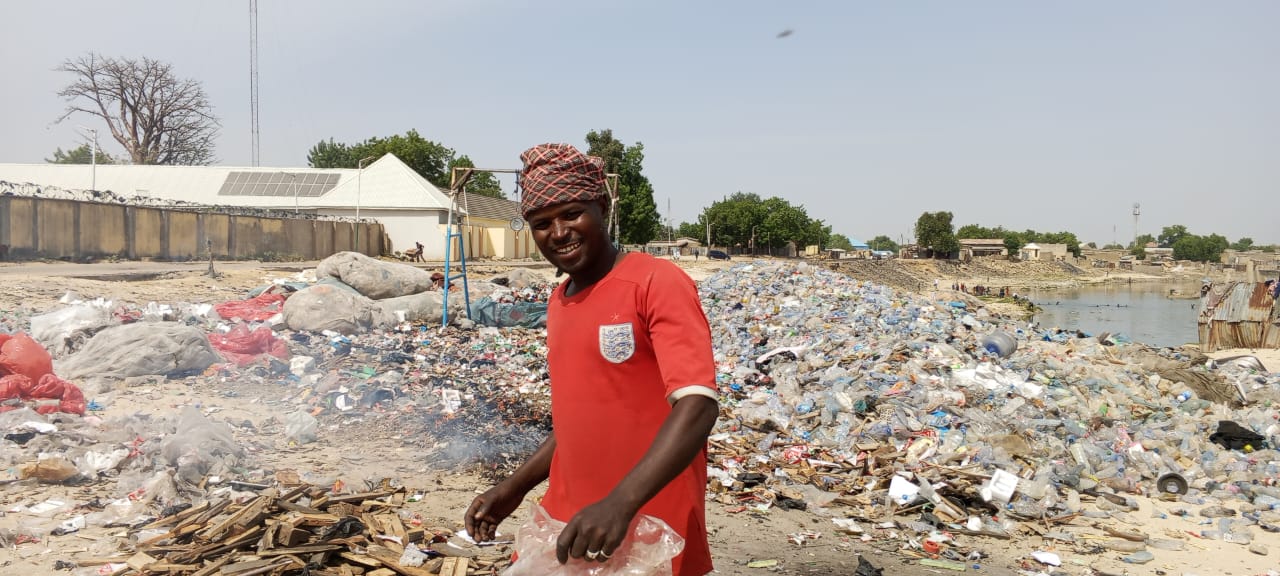
Mallam Samaila, 46 years old, is a father of 12 children with three wives, and he also takes care of several siblings under his care. For over 11 years, he has been selling recycled bottles, and this trade remains his only source of income. Although he engages in other activities like hawking fresh fruit in the evening, that stands as a second option for sustaining his large family.
“I buy bottles from children who pick them from trash. These children also use the money for survival. They feed their families with the little they hunt in the trash, and sell them to people who often use them for drinking water and food storage,” he explained. “I do this business to support my family and neighbours, and I also export some of the bottles as far as Kano, Kaduna, and Jos for recycling. People often find it cheaper than buying a new bottle for personal use.”
He added that he also has people who keep recycled bottles for him to buy, especially from event centers, naming ceremonies, wedding ceremonies, and other social gatherings. After these events, he goes around to collect and purchase the bottles for resale.
Samaila also revealed that when bottles are broken and unsellable, he burns them at the riverbanks of Ngadabul. While this practice helps him dispose of waste, it has severe consequences for both human health and the environment.
Abubakar Onah, a climate change expert and deputy director from the Ministry of Environment, warned about the environmental dangers of Samaila’s practices:
“Burning plastic bottles releases toxic gases such as dioxins and carbon monoxide into the atmosphere, contributing to air pollution and climate change. When plastics are burned near rivers, harmful chemicals leach into the river, contaminating it and endangering aquatic life. Over time, this leads to long-term environmental degradation.
He added, “Rubber or plastic when burned in that area takes years for a plant to germinate in that affected area. Rubber in the sand can last for years before it decays and disappears to allow plants to germinate properly. It destroys the quality of the soil, often leaving it with no moisture to support plantation.”
He emphasized the need for sustainable waste management, public awareness, and government intervention to curb open burning and unsafe recycling. He explained that there are no modalities put in place to train recyclers on how to protect themselves and the entire community, either in the process of using chemicals to wash and recycle bottles for personal use, or how to protect themselves from the dangers they may encounter in the process of picking from trash.
Dr. Abubakar Shettima, a medical doctor from the University of Maiduguri Teaching Hospital, highlighted the health hazards linked to recycled bottles:
“Reusing plastic bottles for food and water storage exposes people to chemicals like BPA and phthalates, which can disrupt hormones and bring long-term illness. The problem of burning the bottles, when inhaled, can cause respiratory issues such as asthma, eye irritation, and even cancer. The children who collect the bottles from trash and dirt are at the highest risk of exposure to harmful substances.”
He added, “It also increases the high rate of out-of-school children roaming the street and seen picking dirts from trash during school hours, when they are supposed to be in school.”
He stressed that without proper regulation and education, the health risks will continue to grow.
Dr. Abubakar says that the health risks, hazards, and dangers are more than the cheap bottles we assume will help our economy. The implications of Mallam Samaila burning bottles releases poisonous smoke, affecting nearby residents, especially children and elderly people, and will have a severe impact on their health. Toxic ash and chemicals contaminate the Ngadabul River, harming water quality and aquatic life.
For Samaila and many others, this trade is a vital source of income, making it hard to abandon without alternative livelihoods, while children involved in collecting bottles face dangerous health hazards and often miss school.
While recycled bottles provide affordable options and income for many in Maiduguri, their unsafe reuse and disposal pose serious health and environmental threats.
Dr. Abubakar advised the government to have public health campaigns to educate communities on the dangers of recycled bottles to health, and also modalities should be put in place to see how people can stop the reuse of bottles, stop the contamination of river water and harming the aquatics, and also avoid burning plastic and rubber for air pollution.
This story of recycled bottles from trash to table is a reminder that survival and safety must go hand in hand. Without urgent action, the very bottles that sustain livelihoods today maybe tomorrow’s source of disease, environmental disaster, and health risk to humanity.