

By Adamu Abdullahi
Overview of the crisis in Simami, FCT
In parts of the Federal Capital Territory, communities are forced to rely on dug wells and stagnant streams contaminated with animal waste, exposing residents to waterborne diseases such as cholera, typhoid, and dysentery. During the dry season, these sources become even more unhygienic, often containing bacteria, viruses, and parasites. The burden of fetching water falls disproportionately on women and children, who spend hours walking long distances, limiting educational and economic opportunities.
Simami’s reality: unsafe sources and seasonal scarcity
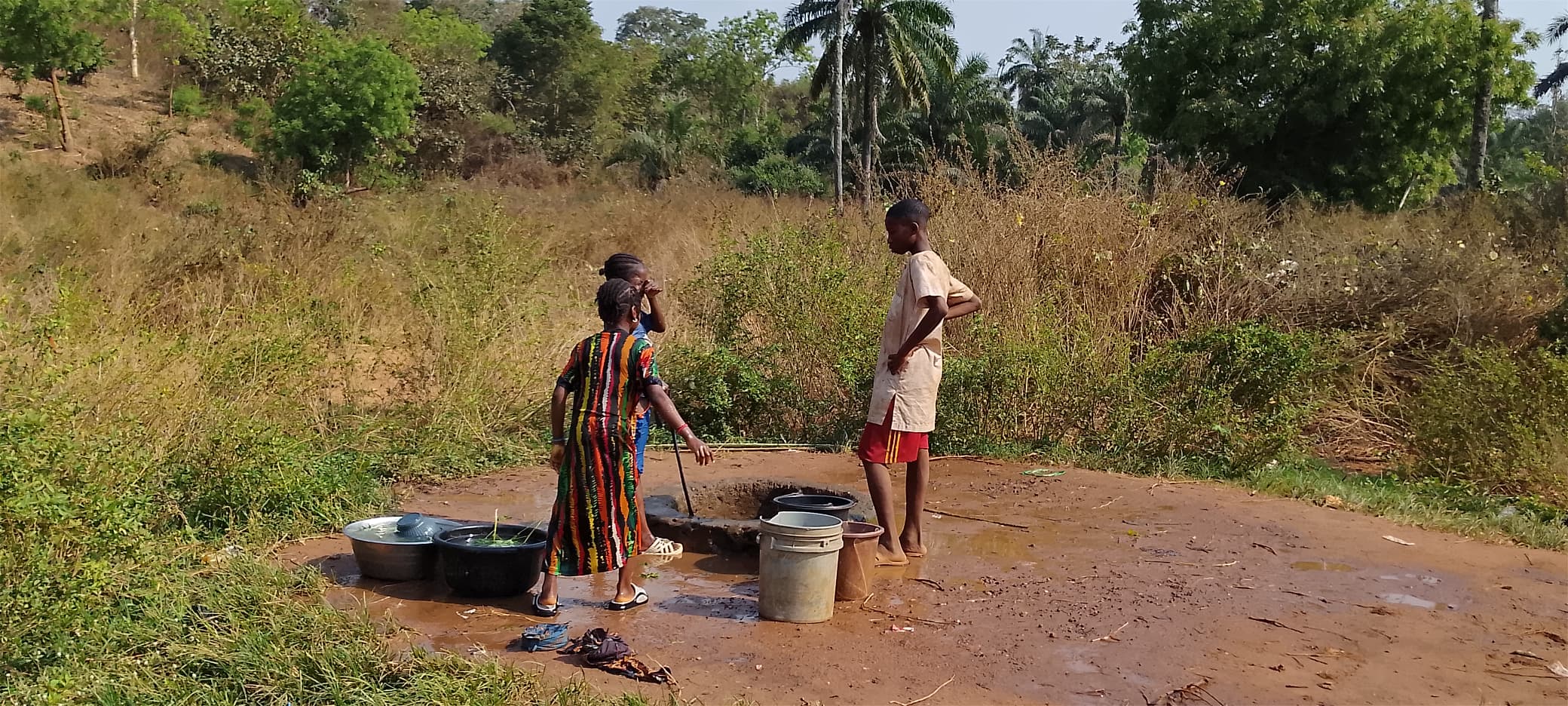
Simami (Ubo) in Kuje Area Council, Rubochi Development Area, has no functional borehole or reliable water supply, despite repeated appeals from the traditional ruler and community members. During the peak of the dry season, wells dry up, leaving residents with only a shallow, stagnant stream used for all domestic purposes, including drinking. The community’s pleas for intervention have largely gone unaddressed, deepening a cycle of hardship and preventable illness.
“Our suffering has gone unnoticed. Despite several cries for help over the years, our story has remained the same,” said His Royal Highness (HRH) Aliyu Kaura, Village Head of Simami.
Daily burden on women and children
Women and children bear the highest burden of water collection, often making multiple trips a day. This daily task starts before dawn and stretches through the afternoon, especially during scarcity. The time lost fetching water reduces school attendance and limits income-generating activities.
“We are used to it,” said community elder Sam Ajiya. “Year in, year out we struggle to have access to clean water. During scarcity, women must make nearly four trips a day to get water for drinking and basic needs.”
Zainab Haruna, a mother of three and Akara seller, said, “During the dry season, water no dey. We wake up 4:00 am before we get the water—only one time we go use am. Anything 10:00 am, we go again.” She added that the water is used for drinking, washing plates, and cooking, sometimes with minimal purification.
Nineteen-year-old Hafsat Musa explained, “We dey drink am. We let the water parboil, and then we cook. If na to drink, we go boil am first and add alum.”
Infrastructure gaps and governance challenges
While FCT RUWASSA continues to engage partners like WaterAid Nigeria and JICA to improve water and sanitation, these efforts remain largely invisible in remote communities like Simami. According to residents, the Local Government Area council—responsible for establishing and maintaining rural water supply and sanitation facilities—has not provided a borehole or alternative reliable source. Communities say they are often remembered only during political campaigns, leaving essential services unaddressed.
Wider context and compounding vulnerabilities
Simami’s conditions reflect a broader crisis across Nigeria, where millions lack access to safe drinking water, contributing to high rates of child mortality from waterborne diseases. Despite a state of emergency declared in the WASH sector in 2018, many remote communities still lack basic infrastructure. In Simami, poor road networks worsen access to services and markets; it can take at least three hours to reach the community from Kuje due to the state of the roads.
The population—just over a thousand, predominantly Gbagyi and Bassa—is mainly composed of farmers who cultivate guinea corn, maize, and yams. Like other surrounding villages in Rubochi, residents rely on dug wells and shallow streams, which are unsafe and often shared with animals. The streams are narrow and shallow, with reddish-brown sediment making it difficult to identify cleaner sections, further complicating safe collection.
Voices from the community
“This is the water I use for the Akara. If I fetch, I wash beans; I fit boil am before I wash the beans then carry am go engine,” said Zainab Haruna.
“Our story has remained the same,” HRH Aliyu Kaura emphasized, calling for a functional borehole and reliable safe water supply.
Residents consistently stress the need for potable water and other social amenities to make the environment habitable, support education, and improve healthcare. They also express concerns about security, noting that ongoing tensions between farmers and herders could deepen food insecurity if left unaddressed.
What’s urgently needed
- Safe water infrastructure: A functional borehole and community-managed water system to ensure year-round access to potable water.
- Basic water treatment support: Provision of filters, chlorine tablets, and training on household water purification and safe storage.
- Road improvements: Better road access to reduce isolation, facilitate service delivery, and support livelihoods.
- Health and education services: Strengthened primary healthcare and school support to reduce the impact of water-related illness and missed schooling.
- Community engagement and accountability: Transparent coordination between the Local Government Area council, RUWASSA, and development partners, with clear timelines and community feedback mechanisms.
A clear call to action
Simami’s residents have done their part: they’ve repeatedly appealed, adapted, and endured. It’s time for responsive governance and tangible infrastructure that respects their dignity and secures their health. Safe water isn’t a privilege—it’s a right.



УАЗ ПАТРИОТ АКПП УАЗ ПАТРИОТ с АКПП: Это не просто внедорожник, это легенда, адаптированная к современным требованиям комфорта и управляемости. Автоматическая коробка передач, которой оснащен этот автомобиль, значительно упрощает процесс вождения, особенно в сложных условиях бездорожья и городского трафика. Представьте себе: вы легко преодолеваете любые препятствия, не отвлекаясь на постоянное переключение передач, а просто наслаждаетесь поездкой. Просторный салон, вместительный багажник, высокий клиренс и мощный двигатель делают УАЗ ПАТРИОТ с АКПП идеальным выбором для тех, кто ценит свободу передвижения и не боится выезжать за пределы асфальтированных дорог. От рыбалки и охоты до семейных путешествий и экстремальных приключений – этот автомобиль справится с любыми задачами. Не упустите возможность стать обладателем надежного и универсального внедорожника, который подарит вам незабываемые впечатления!