

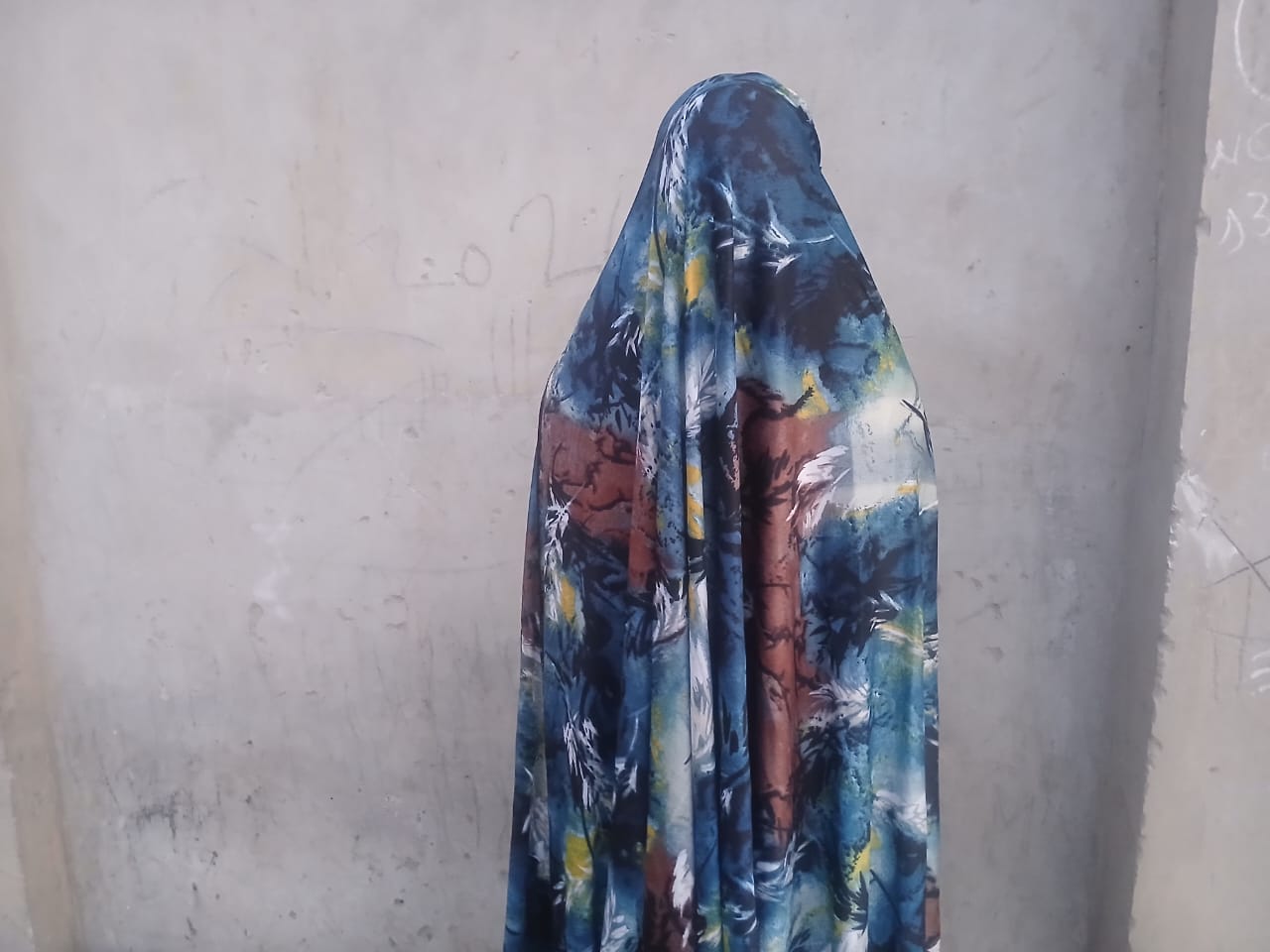
By Ngamariju Jarafu
One evening in Maiduguri, a young woman Farida Haliru, went out to a nearby charging point, a simple errand she had done many times before.
Usually, her brother would walk with her or collect the phone on her behalf. But that night, he had gone out to watch a football match. Farida decided to make the short walk alone.
On her way back home, she noticed two young men following her. At first, they tried to start a conversation, but she ignored them and kept walking. Suddenly, one of them grabbed her from behind.
Frightened, Farida screamed for help and struggled to break free. During the struggle, she recognised one of the men by his voice and shouted his name. He was someone she knew, a neighbour from her community.
Her resistance and cries disrupted the attack. Afraid they might be caught, the men quickly ran away before carrying out their plan. Farida escaped, but the experience left her shaken. Her phone was partially damaged during the struggle.
It was a painful reminder that even ordinary moments, like walking home from a nearby shop, can suddenly become dangerous for many women.
When Farida told her mother what had happened, she expected her family would report the matter to the police. Instead, the issue was quietly taken to community elders.
After hours of discussion, the accused acknowledged their guilt and wrongdoing apologised, promised not to repeat their actions and compensated Farida for the damage to her phone. The elders advised both families to forgive each other and maintain peace within the community.
“My parents believed that going to the police would bring shame to our family,” Farida Haliru said softly. “They thought it was better for the elders to handle it.”
Her experience reflects the reality for many survivors of sexual and gender-based violence (SGBV) in northeastern Nigeria. In many cases, families prefer to handle such incidents privately rather than report them to the authorities.
Experts say several reasons contribute to this silence. According to the United Nations Population Fund (UNFPA), fear of stigma, community pressure, and limited awareness of legal rights often prevent survivors from seeking justice. Reports by humanitarian organisations also indicate that cases of sexual and gender-based violence have increased in parts of northeastern Nigeria due to years of conflict and displacement. Women and girls in internally displaced persons (IDP) camps and host communities are particularly vulnerable, while many incidents remain unreported because families prefer to resolve them quietly within their communities.
Mrs. Pauline Kuje Vana, a human rights activist and journalist in Maiduguri, said families often keep SGBV cases private out of fear of social stigma.
“Many families worry about shame and what people in the community will say,” she explained. “Some even fear it could affect a survivor’s chances of getting married. Because of this, they often prefer to handle the matter quietly within the family.”
She added that distrust in the justice system makes matters worse. “Some believe going to the police or seeking legal redress may not work in their favour. Others fear that reporting could expose the survivor to public humiliation,” Kuje Vana said.
Law enforcement officials also acknowledged the problem. ASP Nahum Kenneth Daso, Police Public Relations Officer (PPRO) of the Borno State Police Command, said underreporting continues to limit efforts to address sexual and gender-based violence.
“Despite our efforts and collaboration with agencies like the Ministry of Women Affairs, the Ministry of Information, the National Orientation Agency, and several non-governmental organisations, many cases still go unreported,” he said.
“Families often fear stigma, stereotypes, and discrimination.”
Daso said the police handle such cases with strict confidentiality and a survivor-centred approach.
“Our priority is the safety and protection of survivors. Specially trained officers in our gender units handle these cases with professionalism and empathy,” he explained.
He also warned against settling serious crimes outside the legal system.
“While minor disputes may sometimes be resolved through community mediation, serious offences like sexual assault must be reported to the police and not handled privately,” he said.
Across Nigeria, sexual and gender-based violence remains widely underreported despite existing legal protections. The Violence Against Persons (Prohibition) Act (VAPP) criminalises various forms of abuse and provides legal remedies for survivors. However, implementation remains uneven in many communities, where social pressure, fear of stigma, and reliance on informal dispute resolution mechanisms often prevent cases from reaching the justice system.
Beyond the immediate trauma, survivors of sexual violence may face long-term physical and psychological challenges. This makes timely medical care, counselling, and legal support especially important.
Still, many families continue to turn first to traditional leaders for mediation.
For many communities, elders remain trusted figures who help resolve disputes and maintain peace.
Malam Hassan Mohammed, a community elder in Maiduguri, said mediation is common but should not replace justice in serious cases.
“People trust the elders to help resolve disputes peacefully,” he said. “But when the issue is serious, families should report it to the appropriate authorities.”
Advocates say stronger community awareness and closer collaboration between traditional leaders, law enforcement agencies, and humanitarian organisations are essential to addressing SGBV.
Organisations such as UNICEF support programmes that provide counselling, medical care and legal assistance to survivors in conflict affected areas.
Yet for many survivors, silence remains a heavy burden.
“I still think about what happened,” Farida said quietly. “Sometimes I feel like my voice was never heard.”
As long as communities continue to settle such cases, many incidents of sexual and gender based violence will remain hidden, far from the justice system and rarely heard beyond closed doors.






Нарколог на дом в Химках особенно востребован тогда, когда состояние человека уже нельзя назвать обычным похмельем, но он категорически отказывается ехать в клинику. Запой тянется несколько дней или дольше, нет полноценного сна, пульс постоянно учащённый, руки трясутся, давление скачет, а любое утро начинается не с облегчения, а с новой дозы алкоголя «чтобы не развалиться». В такой ситуации родственники оказываются между страхом и беспомощностью: понятно, что дальше ждать опасно, но уговорить собрать вещи и поехать в стационар не получается. Формат выезда нарколога на дом как раз и закрывает этот тупик — врач приезжает туда, где сейчас находится человек, оценивает риски и сразу начинает помощь.
Исследовать вопрос подробнее – https://narkolog-na-dom-himki11.ru/vyzov-narkologa-na-dom-v-himkah/
«Как отмечает врач-нарколог Алексей Николаевич Прудников, «выезд нарколога на дом — это возможность стабилизировать состояние пациента в привычной обстановке, снизив стресс и риски осложнений».»
Получить дополнительные сведения – http://