By Abdulsalam Alkali.
Since the beginning of
Ramadan, residents of Gubio Local Government Area in Borno State have been waking before dawn not for prayers alone, but to join long queues for water.
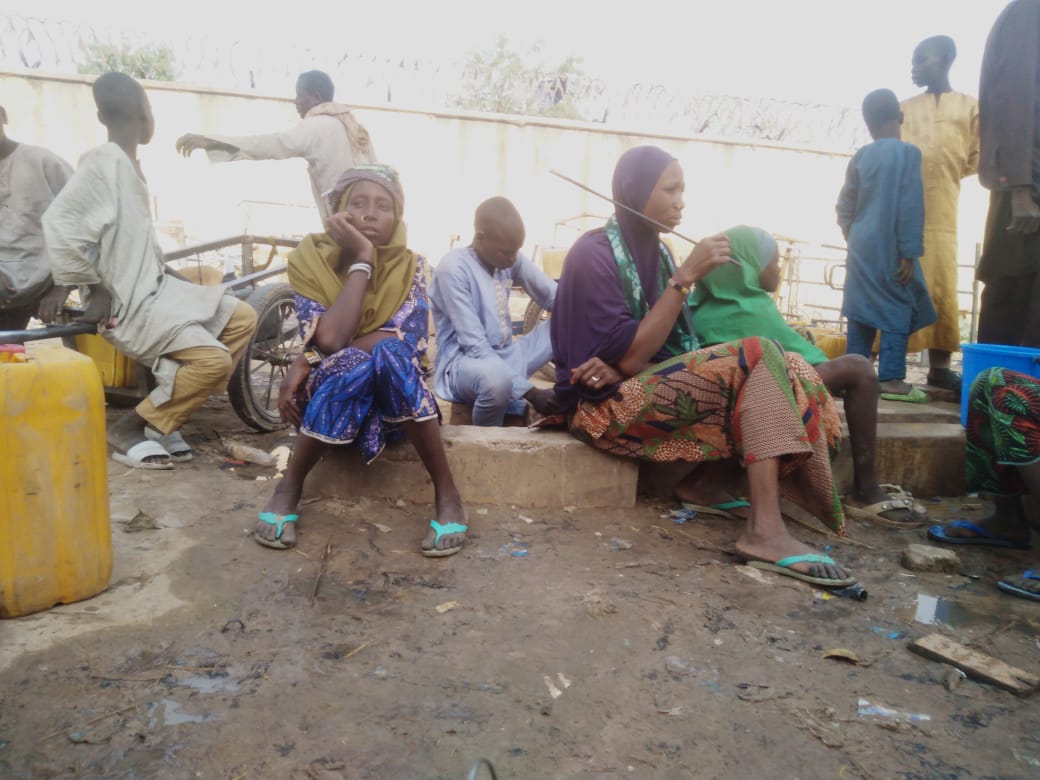
In the cool darkness of early morning, men, women, and children hurry toward a solar-powered water dispenser. Most of those waiting are women and children, clutching yellow gallons, small kettles, and rubber containers as they patiently line up for their turn.
“We will wait here until the sun comes up and the water starts flowing,” said a woman who identified herself as Yahalima.
Yahalima and two children walk each morning from Bla Karaye, an outskirt community largely inhabited by Internally Displaced Persons (IDPs).
Many families there have built mud houses themselves after fleeing insurgency in neighboring villages.
Nearby, Abor Massa arrived riding a donkey with six empty gallons strapped to its sides.
“Every Ramadan comes with the challenge of water. A gallon sells for 500 naira, who can afford that?” he asked as he joined the queue.
Residents say water scarcity worsens during Ramadan, when demand increases for cooking and other domestic needs. Many attribute the persistent shortage to the lack of steady electricity supply, as most boreholes in the area depend on electric power.
“It’s very difficult to get petrol here,” said a driver traveling from Gubio to Maiduguri. “People cannot easily run generators. Soldiers often arrest those selling petrol because they fear insurgents might gain access to it.”
The solar-powered water system in Gubio is currently the only reliable source for many residents, but it is insufficient to serve the growing population. The number of displaced people in the area has increased due to ongoing insecurity and the limited military presence in surrounding communities.
As of the time of filing this report, efforts to reach the relevant authorities for comment were unsuccessful.