By Haroon Aremu,
In a vox pop, when they asked a simple question on the streets of Europe and America: “Which country is the poorest in the world?” The answers came quickly, confidently, and shockingly wrong.
“Africa.” “Africa is the poorest.” “Africa.” Not one voice hesitated. Not one voice paused to rethink. And therein lies the tragedy not of Africa, but of global ignorance because Africa is not a country. Africa is a continent. And more dangerously, Africa is not poor.
The birth of lies of how Africa became a Global stereotype. For decades, Africa has been reduced to a single, distorted image: poverty, hunger, conflict, corruption, and helplessness.
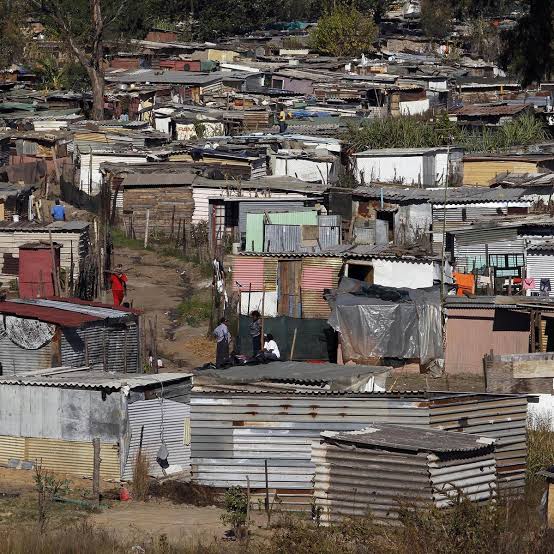
In global media narratives, Africa is often portrayed as a land of endless crises children with distended bellies, dusty villages, and hopeless economies. These images have travelled faster than facts, shaping how the world perceives the continent.
But stereotypes are not truths. They are shortcuts of ignorance. The reality is far more complex and far more powerful. Nigeria, Africa’s most populous nation and largest economy, is often caricatured as a land of scams, insecurity, and chaos.
Yet Nigeria is also one of Africa’s biggest economy by GDP, global hub of music, film, and tech innovation, home to billion-dollar startups and Africa’s largest film industry (Nollywood), and one of the world’s leading producers of oil and gas. Nigeria’s problem is not poverty of resources it is poverty of governance.
Ghana is frequently portrayed as a quiet, underdeveloped state. But Ghana is one of Africa’s most stable democracies, a major producer of gold and cocoa, a growing tech and fintech hub, and a country with rising middle-class influence and strong diaspora impact. Ghana is not poor. It is strategically under-recognised.
South Africa is often stereotyped as a crime-ridden society haunted by racial inequality. But in reality South Africa is also Africa’s most industrialised economy. It is a home to advanced infrastructure and global corporations and also one of the world’s largest producers of platinum, gold, and diamonds. Its challenge is inequality, not lack of wealth.
Kenya is a “Tech Savannah Ignored”. Kenya is often reduced to safaris and wildlife documentaries. But Kenya is East Africa’s innovation capital, home to M-Pesa, one of the world’s most revolutionary digital payment systems. Kenya is a regional hub for startups, logistics, and global investment. Kenya is not backward. It is digitally ahead of many Western economies.
Countries like Sierra Leone and Benin Republic are often dismissed as “poor African states.” But Sierra Leone has rich mineral resources, including diamonds and iron ore. It is a growing post-war economy and youthful innovation sector.
Benin Republic has strategic trade routes and ports with a vibrant informal economy and cultural influence across West Africa. Their struggles are historical and structural—not natural.
Here is the irony the world refuses to confront, Africa holds an enormous share of the world’s natural wealth. The continent possesses about 30% of the world’s mineral resources, including gold, diamonds, cobalt, platinum, and uranium. Africa is home to vast reserves of oil, gas, rare earth minerals, and agricultural land that the world depends on.
One of the most persistent and misleading stereotypes about African countries is the belief that Africans are largely uneducated, technologically backward, and incapable of innovation without foreign intervention. This narrative suggests that modern ideas, digital skills, and scientific breakthroughs are imported into Africa rather than created within it.
Yet this claim collapses under reality: African youths are building global tech startups, engineers are designing fintech systems used by millions, filmmakers are reshaping global entertainment, and researchers are contributing to science and medicine across continents.
The problem has never been a lack of intelligence or creativity; it has been the lack of global recognition and supportive systems to amplify Africa’s homegrown brilliance.
If wealth were measured by resources alone, Africa would not be poor. It would be unbeatable. So why does the world think Africa is poor? Because poverty is not just economic, it is political.
Africa is not poor in resources. Africa is poor in systems, leadership accountability, and equitable distribution of wealth. And that is not the fault of ordinary Africans.
The truth is painful, Africa is rich, but Africans are made poor by mismanagement. Africa is powerful, but its power is fragmented by borders and politics. Africa is wealthy, but its wealth is exported cheaply and imported expensively.
The vox pop passers-by responded to is a classic case of when ignorance meets reality. When people on Western streets say, “Africa is the poorest country,” they are not entirely guilty. They are victims of narratives created by western media framing, historical colonial distortions, and Africa’s own failure to tell its story convincingly.
The real question is not why foreigners think Africa is poor. The real question is why has Africa allowed the world to believe a lie? Imagine if Africa were one country. What if Africa was not divided into 54 countries? What if Africa spoke with one voice, traded with one currency, and defended its interests collectively?
Even in its current fragmented state, Africa remains the world’s most resource-rich continent. If united, it would not beg. It would dictate.
Africa is not poor, Africa is plundered. Africa is not the poorest place on earth. Africa is the most misunderstood. Africa is not lacking in wealth. Africa is lacking in systems that protect its wealth. Africa is not a burden to the world. Africa is the world’s hidden backbone.
Until African governments rise to prove this reality, not with speeches, but with structures, the lie will continue to travel faster than the truth.
But history has a way of correcting lies. And when Africa finally tells its story in its own voice, the world will discover a shocking truth: The poorest continent was never Africa. The poorest thing about Africa was how the world chose to see it.
Haroon Aremu Abiodun is a Nigerian writer and wrote in via exponentumera@gmail.com.