By Haroon Aremu
I scroll through Instagram almost every day, and it feels like walking through a digital hospital corridor only this time, the diagnoses come before the sickness.
“Stop eating this food, it damages the liver.”
“This one leads to kidney failure.”
“Eat this consistently and you’re courting colon cancer.”
“Even fruits are dangerous if taken too often.”
This is a new year a chance to stop the noise of “don’t eat this” and “don’t eat that” and choose health with intention: not by following fear-driven fads but by trusting clearer science, better food systems, and our own commonsense. Health researchers today are doing exactly that — cutting through scare headlines with careful studies, meta-analyses, and community trials that separate hype from harm, working to translate complex nutrition science into usable guidance rather than endless prohibition.
They test diets in real populations, track long-term outcomes in cohorts, push for transparent food labeling and reformulation of ultra-processed products, and partner with public-health campaigns to teach people how to read ingredients instead of panic at a single headline.
Doctors. Nutritionists. Wellness influencers. Fitness coaches. Random content creators with microphones and confidence. Everyone seems to know something deadly about what we eat. Everyone sounds certain. Everyone sounds urgent.
And suddenly, the plate in front of us no longer looks like nourishment—it looks like a threat.
At first, I dismissed it as social media noise: exaggerated claims, half-baked research, fear marketing. But then reality called—literally. A call from home. A family member. A nurse. Someone who lives inside the hospital system, not Instagram.
She spoke calmly, but her words were heavy: liver complications, kidney damage, conditions linked to long-term, consistent consumption of certain foods many Nigerians eat without blinking. Not drugs. Not alcohol. Food.
That was when the scrolling stopped being casual.
I returned to Instagram today, and there it was again: another food “experts” say we should avoid entirely. Then another. Then another. Until the question screamed louder than the warnings: What, exactly, should we eat again?
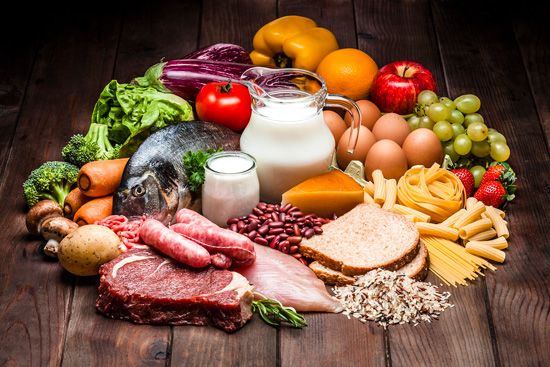
If rice is dangerous. If bread is harmful. If oil is toxic. If sugar is poison. If processed food is a death sentence. If even fruits can betray us when eaten “too much” or “at the wrong time.” Then what is left? Water? Even water now has warnings.
This is no longer just confusing. It is frightening. And frankly, it is exhausting.
But beyond the noise and panic lies a deeper, more dangerous silence—the silence of regulation, guidance, and coordinated public health communication. Where is the Federal Ministry of Health in this conversation?
To Professor Muhammad Ali Pate, Nigeria’s Coordinating Minister of Health and Social Welfare, this fear is spreading unchecked. Nigerians are confused, anxious, and left to navigate a minefield of nutritional information alone.
At the same time, scholars and policymakers are advocating upstream fixes: rebuilding agricultural systems that deliver fresh, seasonal, locally grown foods; supporting smallholder and regenerative farming so nutritious staples are affordable and available; and incentivizing industry to replace synthetic additives with wholesome ingredients. If we take this year seriously, we will move from a culture of alarm — “this food is dangerous” — to a culture of preparation and prevention: planting community gardens, buying from farmers, cooking simple whole foods, demanding labs and regulators provide evidence (not clickbait), and pressing governments to prioritize agroecology and food sovereignty.
Where are the clear, authoritative, nationwide guidelines on what is safe, what is risky, and what is outright dangerous? Where is the public sensitisation that separates science from speculation?
And where is the World Health Organization? WHO cannot remain distant while a country of over 200 million people is bombarded daily with contradictory health claims. Global health leadership must translate into local clarity, not just reports and conferences.
United Nations Children’s Fund (UNICEF), too, must answer. Children are growing up in this chaos—fed diets shaped by poverty, misinformation, and unregulated products. What are the long-term consequences, and what is being done to prevent them?
Then there are the regulators. National Agency for Food and Drug Administration and Control (NAFDAC) must look beyond labels and approvals on paper. Nigerians need assurance that what is sold in markets, supermarkets, and roadside stalls will not slowly destroy their organs. Harmful additives, substandard processing, and unsafe imports cannot continue to slip through cracks while citizens pay with their health.
NDLEA, often focused on narcotics, must also confront the quiet drug crisis hidden in food supplements, unregulated enhancers, and chemically-laced consumables marketed as “energy,” “strength,” or “quick fixes.”
This is not hysteria. This is not paranoia. This is a legitimate public health alarm.
A nation cannot thrive when eating becomes an act of fear. A people cannot live well when survival feels like guesswork.
Nigerians deserve more than Instagram warnings and WhatsApp broadcasts. They deserve structured education, strict regulation, and honest communication. They deserve to know—not guess—what nourishes them and what destroys them.
In short, this New Year should be a collective recommitment to eating that treats food as medicine and farming as the foundation of public health dramatic, deliberate, and rooted in real research rather than rumor.
This is because if everything we eat is dangerous, and no authority is speaking clearly, then the real danger is not just in the food. It is in the silence. And that silence is becoming deadly.
Haroon Aremu Abiodun is a concerned Nigerian Analyst and can be reached via Exponentumera@gmail.com