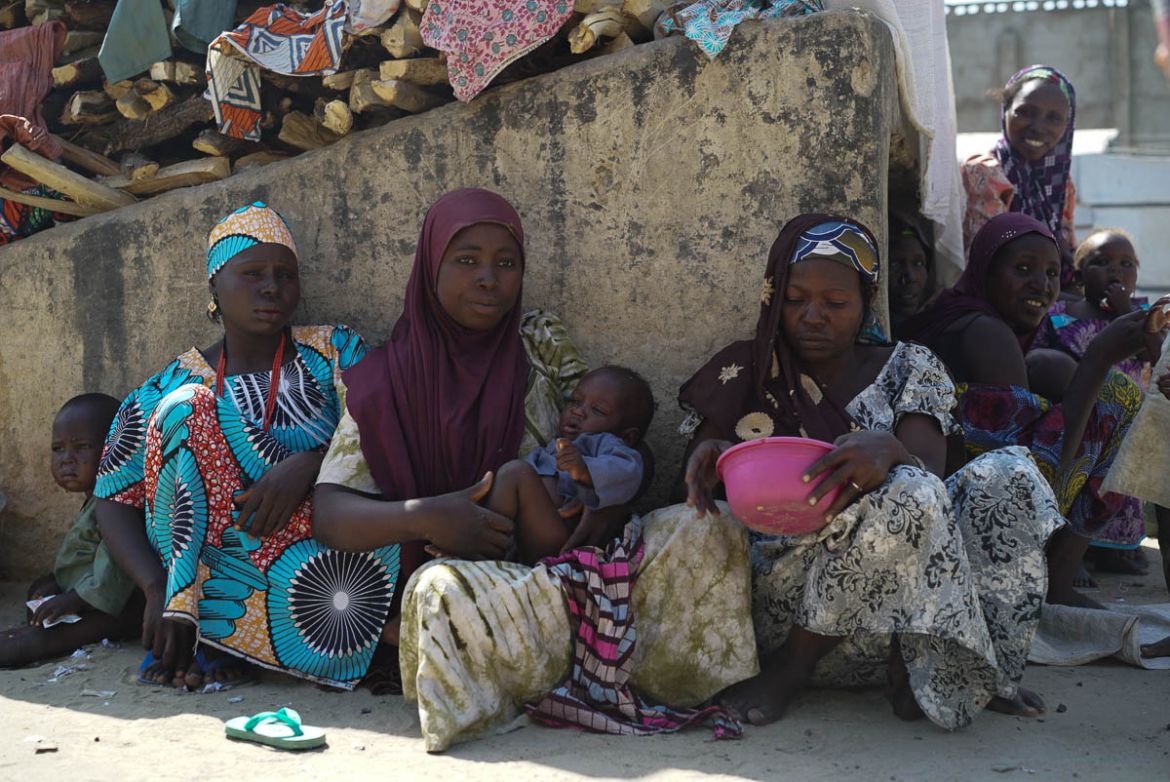
In Grema Shuwari Garke camp in Maiduguri, 17-year-old Aisha Mohammed’s daily routine is a quiet testament to a crisis no one is counting. She rises before dawn, queues for water, helps her mother grind maize, and cares for her younger siblings. Her first meal of the day, around 10 a.m., is often just black tea and a piece of masa. Lunch is irregular. According to her, the family’s monthly food rations is a normal basket of maize, beans, and oil from the World Food Programme (WFP) was last received 42 days ago and ran out three weeks back.
“When the food is finished, we turn Garri and prepare some dried food. She is not pregnant to qualify for special mother-to-be supplements. She is a teenage girl, and in the complex architecture of humanitarian situation in Northeast Nigeria, that means she is institutionally invisible. Aisha is one of the 1.2 million adolescents’ girls in Borno, Adamawa and Yobe (BAY) states who are in the trap of malnutrition. This is a problem because it affects not just them, but also the future generation.
The National Demographic Health Survey (2021) indicate that 58% of adolescent girls aged 15-19 in the Northeast are anaemic, a condition primarily caused by iron deficiency and linked to poor diet. The October 2023 the Cadre Harmonisé analysis indicates that 4.4 million people in the BAY states face acute hunger, yet its breakdown does not isolate the adolescent experience.
The Cadre Harmonisé analysis (2023) indicates that 4.4 million people in the BAY states face acute hunger, yet its breakdown does not isolate the adolescent experience.
The Policy Gap: Where Laws and Practice Diverge
Nigeria is a signatory to international conventions and has robust national policies that priotize adolescents’ nutrition. National Policy on Food and Nutrition (2016) and the National Multi-Sectoral Plan of Action for Food and Nutrition (2021-2025) explicitly recognize adolescents as a vulnerable group requiring targeted interventions, including micronutrient supplementation and nutrition education. The Borno State Policy on Food and Nutrition (2020) echoes this commitment.
Yet, in reality, implementation is slow. The humanitarian cluster system, which coordinates the response, funnels resources into life-saving interventions for children under five suffering from Severe Acute Malnutrition (SAM) and for pregnant/ lactating women (PLWs). Adolescent girls fall into neither category.
Mr. Finian Ali, National Coordinator of the Scaling Up Nutrition (SUN) Civil Society Youth Network Nigeria, explained this disconnect in an interview.
“The policy framework is not the problem,” Mr Ali stated that “The gap is in operationalization and budgetary allocation. Look at the National Plan of Action; the line items for adolescent-specific programming are negligible and sometimes non-existent. The Ministry of Education, which could host school feeding and health programs, is dealing with inadequate infrastructure. No single entity is held responsible for the nutritional outcomes of these millions of girls.”
Mr Ali said that “A girl that is anaemic 15years today is a high-risk pregnant woman at about 18 years, and she is likely to deliver a low-birth-weight baby. That baby is a prime candidate for SAM. Billions of Naira were invested in the end of the pipeline, in therapeutic feeding centers while refusing to fix the leak at the source which is very important in addressing this critical issue.”
The Legal and Rights Perspective
Barrister Margaret Ikoh, a human rights lawyer who specializes in women and children’s rights, frames the issue as a violation of statutory and constitutional obligations.
“Beyond policies, we have the Child Rights Act (2003), domesticated in Borno State in 2022, and the Violence Against Persons Prohibition (VAPP) Law,” Barrister Ikon explained. “These laws guarantee a child’s right to survival, development, and dignity. Chronic food insecurity and the absence of targeted health services for adolescent girls directly violate these rights. The government has a duty to protect and provide for citizens in these camps. This is not just charity; it is a legal obligation.”
Mrs Ikoh said that the National Social Protection Policy provides a mechanism, but its implementation in humanitarian settings is weak. “Where are the targeted cash transfers for adolescent-headed households or girls at risk? The law is clear. The political will to execute and fund these provisions is not.”
As Borno moves toward camp closures and recovery narratives, teenage girls in places like Grema Shuwari Garke risk becoming casualties of transition neither urgent enough for emergency aid nor visible enough for development planning. Hidden hunger does not announce itself. It accumulates quietly, shaping lives long before statistics catch up.
By Huzaifa Abubakar
uzaifa100@gmail.com