

By Muhammad Ahmad
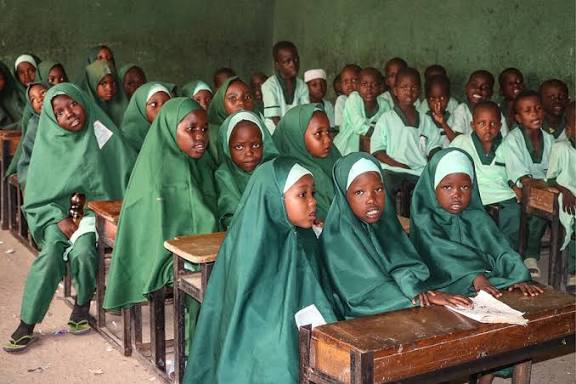
Education is a fundamental right and a powerful device for breaking the cycle of poverty. However, in recent times, despite the improvement in infrastructure including quantity and qualified teachers, adequate transportation, and most importantly, access to technology the education in Kebbi State has continued to deteriorate, especially in the rural areas.
Recently, a brief survey was carried out among some junior and senior secondary students in Kamba Local Government Area, to know the depth of the matter observed that seven out of ten could not read and write a simple sentence in the English language, could not solve simple arithmetic problems including addition and subtraction, and could not even operate a calculator. This could be seen as a factor discouraging them from furthering their education after the completion of secondary school and deterring them from participating in most recruitment exercises that require national exams, which also denied them many opportunities.
Many consider that these problems arise as a result of politicising teachers’ recruitment and training, supervision and monitoring, and a lack of remuneration, among others. Nevertheless, the current security challenges pose a significant threat to education, most especially in rural areas where schools are forced to close indefinitely without a plan for the safety of abduction.
In addition, the policy recently developed by some northern governors of closing schools during Ramadan, which also applies in the state, played a role. This policy is often considered political and has no room in the religious claims it seeks to respect, because even countries like Saudi Arabia and the United Arab Emirates do not fully close schools during Ramadan. Instead, they implement shorter school hours and adjust the schedule to accommodate fasting students and teachers, which can be seen as a common practice to balance religious observance with education.
As a matter of urgency, stakeholders including non-governmental organisations, traditional leaders, religious leaders, political parties, and most especially the opposition should stand against any policy aimed at crippling our children’s education. Also, establishing a special school for talented students, although this may sound selective, is good for developing seriousness among the students.
Most importantly, making it compulsory for all students seeking admission into any post-junior secondary school to pass a reading ability test is also good for early readiness and preparation among admission seekers.
In conclusion, we are collectively appealing to stakeholders to reinvestigate the depth of these problems and think of solutions to those issues leading to the deterioration of our educational systems.
Muhammad Ahmad writes from Kamba, Kebbi State.

Gotta say, 5jlslotapp delivers those sweet slot machine vibes. Been having a blast and the payouts seem fair enough. Give it a spin: 5jlslotapp
Gotta say, 5jlslotapp delivers those sweet slot machine vibes. Been having a blast and the payouts seem fair enough. Give it a spin: 5jlslotapp