By Mangili John
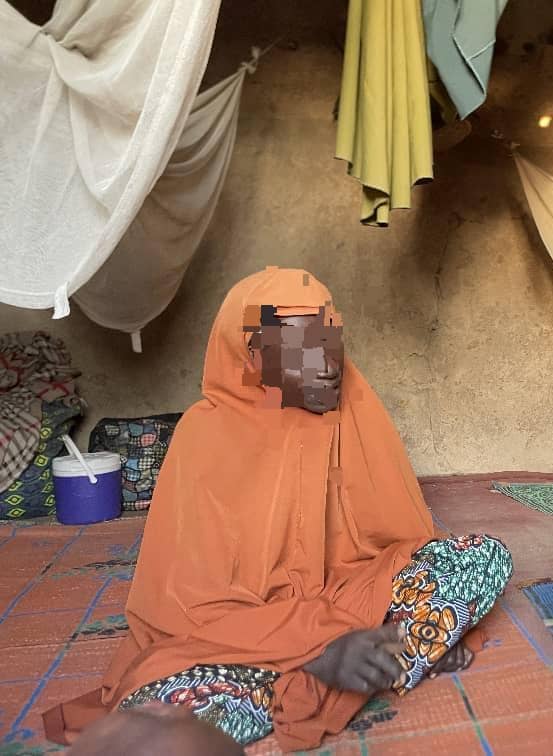
Before sunrise, Amina Audu, 45, wakes in her small, dusty shelter at the Sabon Gari IDP Camp in Maiduguri. She gently shakes her children awake, some still shivering under thin blankets. Each day begins the same with fear, hope and the heavy burden of responsibility.
Thirteen years ago, insurgents attacked her village, Annari in Konduga. Her husband and eldest son were killed in the violence. ”I had no choice but to flee” Amina recounted her ordeal, though carrying the memories of her lost of her family ” and now my only hhope of saving the remaining children” Amina stated with tears.
Today, she lives with four of them, clinging to life in a camp where every day is uncertain.
With no formal education or skills, ‘ I survives on just ₦7,000 a month washing dishes for a nearby family.. “Sometimes we have only one meal,” she says, her voice breaking. “Sometimes, there is nothing. Then we just pray.” She carefully counts every naira, deciding what to spend on food, water, and the little things her children need.
Amina’s story is a reflection of the struggles faced by thousands of displaced people in Borno. The National Human Rights Commission (NHRC) says, “Refugees and displaced persons deserve protection and support to rebuild their lives in dignity.” Yet for women like Amina, protection and support are rare.
Life in Sabon Gari has grown more uncertain. The camp sits on land once owned by the late philanthropist and Islamic cleric, Alhaji Garba Busu. His heirs have asked residents to leave, planning to divide the property. For Amina, this is a terrifying prospect. “only God will come to audio” Amina whispers.
Every morning, she joins queue at the water point, jostling with other women for a few buckets of water. I prepares meals with care, giving small portions to her children first” Her children, some barefoot and in torn clothes, follow her everywhere, clinging to her skirts, understanding that their survival depends on her.
Education is another worry.’. ” My children go to school when possible, but with no money for books, uniforms, or fees, the risk of dropping out is constant`’ Amina further attest that “I want my children to have a life I could not have,” she says, tears in her eyes.
The Universal Declaration of Human Rights states, “Everyone has the right to life, liberty and security of person.” Yet for Amina and thousands of displaced women, these rights are fragile. Safe shelter, steady income, and education remain distant dreams.
Widows like Amina face additional burdens: caring for children alone, coping with trauma, and living under the constant threat of eviction. Still, she persists.
Her strength shows in quiet, daily acts: preparing meals, washing clothes, comforting her children, and never giving up hope. Her dream is simple: a safe home, a stable source of income, and a chance for her children to attend school and live beyond survival. Until that day, she endures every sunrise, carrying hope like a shield against despair.
Amina’s story is a reminder that the human cost of conflict goes far beyond the battlefield. Thousands of displaced women face hardship every day. They are not statistics. They are mothers, daughters, and children who deserve protection, opportunity, and dignity.
For Amina, each day is a struggle but it is also a testament to the quiet courage of those who survive, against all odds, for the sake of their children and their dreams.